

Table of Contents
- Why Humidity Damages Pop Vinyls and How to Store Pop Vinyls Safely
- Humidity Control for Collectibles: Managing Moisture at Home
- Funko Pop Box Protectors: Choosing the Right Barrier
- Silica Gel for Collectible Storage: How to Use Desiccants Correctly
- Preventing Mould on Collectible Boxes: Warning Signs and Fixes
- Step-by-Step Storage Setup for Pop Vinyls
- Common Mistakes When Storing Pop Vinyls in Humid Conditions
- Conclusion
- Frequently Asked Questions
Last Updated: October 8, 2026
Why Humidity Damages Pop Vinyls and How to Store Pop Vinyls Safely
If you want to know how to safely store pop vinyls in humid australian weather, the short answer is this: control the moisture in the room, seal each box behind a physical barrier, and check on your shelf regularly. Humidity is the quiet enemy of every collection. At Pop Pelican, we have spent over 20 years helping collectors protect their figures.
So why does damp air cause so much trouble?
Cardboard is porous. It pulls moisture straight out of the air. Once the box absorbs enough water, it softens, warps, and loses its shape. The ink on the front starts to lift. Then mould moves in.
Vinyl figures face their own risks. Trapped damp air can cloud the paint and leave a sticky film on the surface. In the worst cases, the plastic itself starts to break down.
The good news? Every fix in this guide is cheap and simple. Below, we break down exactly how to store pop vinyls so humidity never gets the upper hand.
Humidity Control for Collectibles: Managing Moisture at Home
Humidity control for collectibles starts with one rule: keep the room stable. Aim for a relative humidity between 40% and 50%. Above 60%, mould and warping become real threats.
Where you store your collection matters as much as how. A garage or shed is the worst choice in a damp climate. These spaces swing from hot to cold and back again. A spare room or a hallway cupboard stays far more stable.
A few practical habits make a big difference:
- Keep shelves away from outside walls
- Leave a gap between boxes and the wall
- Never store figures on the floor
- Avoid rooms with showers, laundry, or cooking steam
- Open a window on dry, breezy days only
Small changes like these cut the moisture load on your boxes without costing a cent.
Using a Hygrometer to Monitor Indoor Humidity
A hygrometer is a small device that measures the amount of moisture in the air. It is the single most useful tool for any collector in a humid climate. You can buy one cheaply online or at a hardware shop.
Check it weekly and write down the reading. If the number creeps above 55%, act before damage starts. A cheap hygrometer removes all the guesswork.
Dehumidifiers and Airflow in Storage Areas
When readings stay high, a dehumidifier fixes the problem at the source. A small unit suits a single room. Empty the tank often so it keeps working.
Airflow matters just as much. Air that cannot move traps moisture against surfaces. Leave space between boxes and run a gentle fan for a few hours a day. Never seal a damp room shut.
Funko Pop Box Protectors: Choosing the Right Barrier
Funko Pop box protectors are rigid plastic cases that wrap around the original box and block moisture from reaching the cardboard. They are the cheapest insurance you can buy. A protector costs very little compared to the value of a rare figure.
Not all protectors are equal, though. Here is what to look for:
- Thickness: 0.35mm to 0.5mm PET plastic holds its shape well
- Fit: snug but not tight, so the box slides in without bending
- Clarity: crystal-clear plastic lets you display the figure properly
- Acid-free material: protects the ink and cardboard long term
Soft plastic sleeves are a budget option, but they crease and offer less protection. Rigid cases win for anything valuable.
Silica Gel for Collectible Storage: How to Use Desiccants Correctly
Silica gel for collectible storage works by absorbing moisture from the air around your items. The little packets pull water vapour in and hold it, keeping the space around your boxes dry.
But here is the part most guides skip: silica gel has a limit. Once the beads are full, they stop working. You have to recharge or replace them.
How to use it well:
- Place one or two packets inside each storage tub
- Use more packets in larger containers
- Check the indicator colour, if your packets have one
- Recharge beads in a warm oven when they are spent
- Replace single-use packets every few months
Do not rely on silica gel alone. It supports a good setup, it does not replace one. Pair it with protectors, airflow, and a hygrometer for a full defence.
Preventing Mould on Collectible Boxes: Warning Signs and Fixes
Preventing mould on collectible boxes comes down to spotting the problem early. Mould spreads fast once it starts, so speed matters.
Watch for these warning signs:
- A musty, damp smell near your shelf
- Grey or black speckles on the cardboard
- Soft, warped, or wrinkled box corners
- Ink that looks faded or lifted
- A chalky white film on the figure itself
If you spot mould, act straight away. Move the affected box to a dry, well-ventilated area. Wipe the surface gently with a dry microfibre cloth. Do not scrub, as this pushes spores deeper into the cardboard.
Separate any affected items from the rest of your collection. Mould spreads through airborne spores, so one bad box can infect a whole shelf. If the damage is severe, the box may be beyond saving. A replacement protector and a drier room will protect the rest.
Step-by-Step Storage Setup for Pop Vinyls
Here is a full setup you can copy today. It takes about an hour and covers every weak point.
What you'll need:
- A hygrometer
- Rigid box protectors
- Airtight storage tubs
- Silica gel packets
- A small dehumidifier or fan
Step 1: Check the room. Place your hygrometer and read it for a few days. Aim for 40% to 50% relative humidity.
Step 2: Clean and dry the space. Dust the shelf and make sure the area is completely dry before you add anything.
Step 3: Add protectors. Slide each box into a rigid protector. Check the fit so nothing bends.
Step 4: Pack the tubs. Stand figures upright. Add silica gel packets between them. Do not overfill.
Step 5: Position and monitor. Keep tubs off the floor and away from walls. Check the hygrometer weekly.
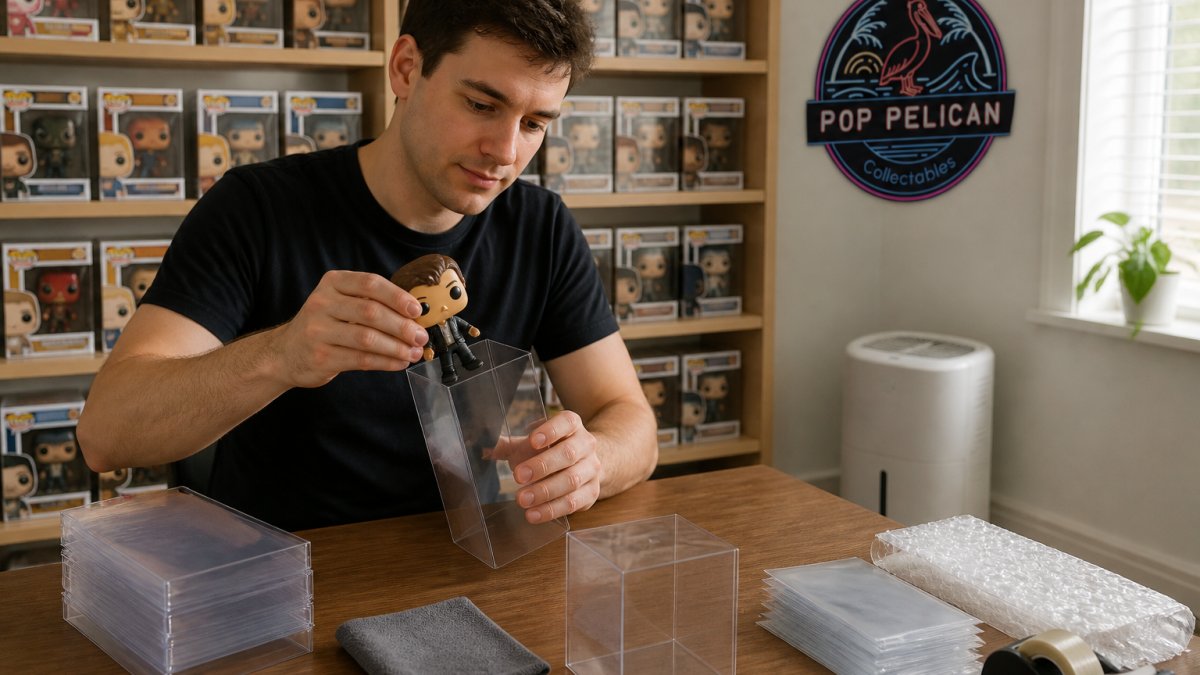
Expected result: A stable, dry shelf where boxes hold their shape for years.
Common Mistakes When Storing Pop Vinyls in Humid Conditions
Most damage comes from a handful of easy-to-avoid errors. Here are the ones we see most often.
Sealing boxes while damp. If you tub a figure on a wet day, you trap moisture inside. Always pack on a dry day.
Skipping the hygrometer. Without a reading, you are guessing. Guessing leads to mould.
Using the garage or shed. These spaces have the wildest swings in temperature and moisture. Keep your collection indoors.
Stacking boxes too tightly. No airflow means trapped damp. Leave small gaps between items.
Forgetting to recharge silica gel. Spent packets do nothing. Set a reminder to swap them out.
Storing on the floor. Cold floors pull moisture. Use a shelf at least knee height.
Avoid these and your collection stays in display condition.
Conclusion
Damp air is the biggest threat to any collection, but it is a threat you can beat. Control the room, add a physical barrier, and check your shelf often. That is the whole game.
When you are ready to add to your shelf, Pop Pelican makes it easy. We are 100% Australian-owned with over 20 years of experience and Australia's largest range of Pop! Vinyls. Every item is officially licensed, and we ship same day for 99% of orders with live tracking for courier deliveries.
Shop with Pop Pelican and build the ultimate collection, protected and proud.
Frequently Asked Questions
How should you store Pop! Vinyl figures in humid weather?
Move your figures out of garages, sheds and bathrooms where moisture builds up. Keep them in an air-conditioned room with a hygrometer to monitor levels, aim for 40-50% relative humidity. Use acid-free tissue inside the box, add silica gel packets nearby, and place figures on shelves rather than directly against external walls, which stay cooler and attract condensation.
Can humidity damage Funko Pop boxes?
Yes. Cardboard absorbs moisture from the air, which softens the box, warps the window plastic and lifts the printed ink. Once the cardboard swells, it rarely returns to its original shape, and the damage reduces resale value significantly. High humidity also creates the damp environment mould needs to grow on the box surface.
Are Funko Pop box protectors enough to protect Pop! Vinyls from humidity?
Protectors slow moisture transfer but do not seal a figure completely. A rigid PET or acid-free protector shields the box from dust, scratches and light handling, yet humid air still reaches the cardboard through gaps. Pair protectors with silica gel for collectible storage and broader humidity control for the best results.
How often should you check collectibles for moisture damage?
Inspect stored figures every four to six weeks during humid months. Look for soft or rippled cardboard, a cloudy window, musty odour or dark speckles on the box. Check silica gel packets at the same time and replace them once the indicator crystals change colour or the packet feels heavy.


