

Table of Contents
- What You'll Need Before You Pack
- Step 1: Choose the Best Packaging Materials for Fragile Items
- Step 2: Double-Boxing Techniques That Protect Rare Collectibles
- Step 3: Padding, Cushioning and Moisture Protection
- Step 4: Documentation, Provenance and Discreet Labelling
- Step 5: Transit Insurance for Collectibles and Shipping Fragile Items: Australia Post Guidelines
- Common Packing Mistakes That Damage Rare Collectibles
- Frequently Asked Questions
Last Updated: September 23, 2026
What You'll Need Before You Pack
Protecting rare collectibles during shipping starts long before the box is taped shut. Preparation decides whether a figure arrives mint or mangled.
Gather these supplies first:
- Two corrugated cardboard boxes, one slightly larger than the other
- Bubble wrap and acid-free tissue paper
- Packing peanuts or air-filled cushions
- Moisture-proof liner or sealed plastic sleeve
- Heavy-duty packing tape
- Fragile and discreet shipping labels
Step 1: Choose the Best Packaging Materials for Fragile Items
The best packaging materials for fragile items combine rigid outer protection with soft inner cushioning. Corrugated cardboard handles impact, while bubble wrap and tissue absorb vibration and friction.
Boxes, Cushioning and Protective Layers
Each material plays a distinct role:
- Corrugated cardboard: structural integrity and impact absorption
- Bubble wrap: surface protection against scuffing
- Packing peanuts: void fill that stops movement
- Air-filled cushions: lightweight cushioning for larger boxes
- Acid-free tissue: safe wrapping for boxes and printed packaging
Bubble wrap alone won't save a heavy die-cast model, weight needs a rigid base. Add a cardboard insert under heavier items so they don't shift downward.
Step 2: Double-Boxing Techniques That Protect Rare Collectibles
Double-boxing is the single most effective method for protecting rare collectibles during shipping: the inner box holds the wrapped item snugly, and the outer box absorbs impact from drops or stacking.
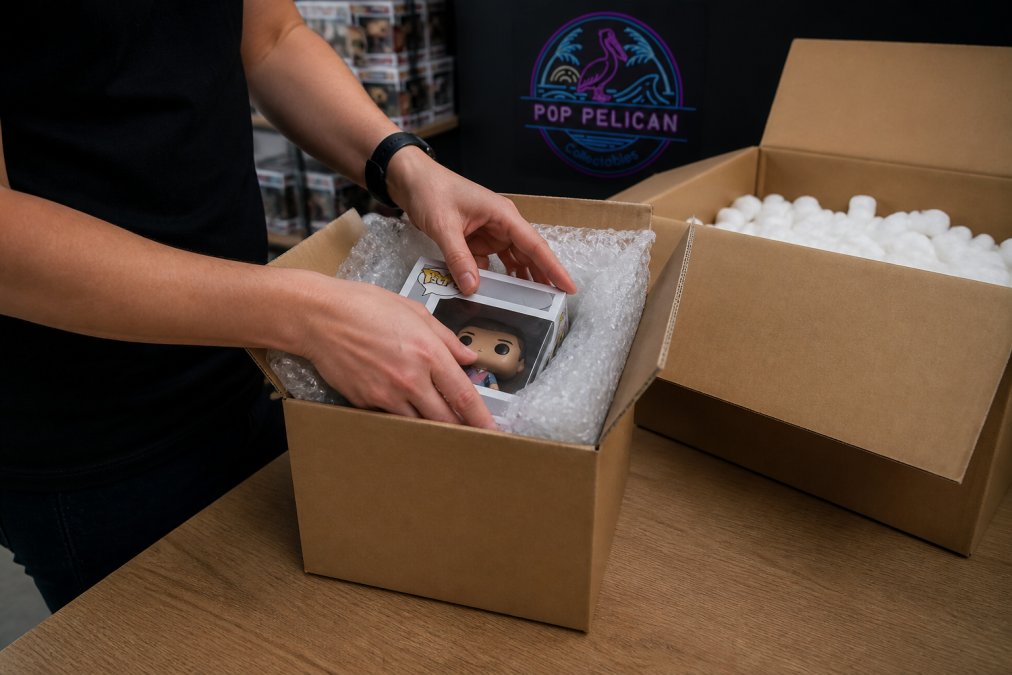
Here's the process:
- Place the wrapped collectible in the smaller box with no room to move
- Seal the inner box on all seams
- Add 5-8 cm of cushioning to the bottom of the outer box
- Set the inner box inside, centred
- Fill all remaining gaps with packing peanuts or air cushions
- Seal the outer box and shake it gently. Nothing should rattle
Right-Sizing Boxes and Adding Void Fill
Right-sizing means matching the box to the item. Too large and the collectible slides into the walls; too small and corners crush.
For high-value goods, custom crating beats standard cardboard.
Step 3: Padding, Cushioning and Moisture Protection
Moisture damages collectibles quietly. Paper packaging warps, vinyl discolours and labels lift when humidity gets in.
Padding and cushioning do different jobs:
- Padding stops scuffing and friction against surfaces
- Cushioning absorbs impact and vibration in transit
Step 4: Documentation, Provenance and Discreet Labelling
Documentation protects value as much as packaging does. For a rare collectible, the paperwork, certificate of authenticity, original receipt, limited edition numbering, convention exclusivity card, is often worth a meaningful slice of resale value on its own. A mint figure with a creased COA sells for less than the same figure with clean paperwork, yet most guides treat documents as an afterthought.
Protecting Provenance Paperwork in Transit
Paper and card documents are more fragile than the collectible itself: they crease, warp, discolour and pick up moisture far faster than vinyl or die-cast metal.
- Sleeve first. Place certificates, receipts and numbering cards into an acid-free, archival-grade sleeve. Standard office plastic can off-gas over time and stain paper.
- Rigid backing. Sandwich the sleeved document between two pieces of acid-free card or a thin rigid board cut to size. This stops bending when the outer box flexes.
- Waterproof layer. Seal the backed document inside a zip-lock or heat-sealed plastic bag. Silica gel inside this bag is optional but useful for long-haul or humid-route shipments.
- Position deliberately. Tape the document pack flat against the inside wall of the outer box, never loose in the void fill, where it will slide, crease and get crushed by the inner box.
- Label it internally. Write 'Documents, Do Not Bend' on the document pack itself so anyone opening the parcel for inspection knows what they are handling.
Photographing for Provenance and Claims
Before sealing the box, build a photo record that would satisfy an insurer or a buyer in a dispute:
- The item itself from front, back, both sides, top and base
- Close-ups of any limited edition numbering, holograms or authentication stickers
- The certificate of authenticity, receipt or invoice, clearly legible
- The item seated in its inner box, and the inner box seated in the outer box
- The sealed outer box with the shipping label visible
Discreet Labelling That Still Complies
Discreet labelling deters theft, a box screaming 'rare collectible' invites the wrong attention. But discretion has limits: courier and postal rules still require accurate declarations for insurance and customs.
For the outer box:
- Use plain, unbranded outer packaging with no retailer logos or item descriptions
- Write 'Fragile' and 'This Way Up' clearly on the top and two sides, arrows and standard handling symbols help more than words in sorting facilities
- Avoid naming the contents on the outside; use a generic description on any required declaration form
- Use tamper-evident tape so any interference is visible on arrival
- Keep the sender name generic if the parcel is high-value and the recipient is known to be away
Step 5: Transit Insurance for Collectibles and Shipping Fragile Items: Australia Post Guidelines
Transit insurance for collectibles is essential for anything you cannot easily replace. Standard parcel cover is built for ordinary goods, and its caps sit well below the value of a rare figure, sealed case or graded card, that gap is where most disputes live.
Matching Cover to Declared Value
Insurance is not a single product. It is a ladder, and you need to climb to the rung that matches the item:
- Included parcel cover. Comes with most tracked services. The cap is low and is intended for everyday goods, not collectibles. Fine for a common loose figure, useless for a limited edition.
- Extra cover / additional cover. Purchased on top of the base service by declaring a higher value. The premium scales with the declared amount. This is the workhorse option for mid-range collectibles.
- Specialist collectible insurance. Standalone policies or add-ons designed for high-value, hard-to-replace items. These typically require itemised schedules, photographs and proof of value, and they price against the collectible market rather than general freight.
Australia Post Requirements You Must Meet
Follow Australia Post's packaging and sending guidelines for compliant packing. The practical requirements that affect claims are:
- A rigid outer box appropriate to the weight and fragility of the contents
- Adequate cushioning on all sides so contents cannot move
- Correct addressing and a valid declaration of contents and value
- Use of a service that includes tracking, and extra cover where the value exceeds the included cap
Climate-Controlled and Specialist Transit Options
Most guides stop at 'buy insurance'.
Extreme heat warps vinyl, softens adhesives and lifts printed labels. Sustained humidity warps paper packaging, rusts metal and encourages mould. Cold is less destructive, but repeated freeze-thaw cycles stress some materials.
For high-value or temperature-sensitive items:
- Ask your courier or freight forwarder whether they offer temperature-controlled or climate-controlled services on the relevant route. These are more common for palletised freight than for single parcels, so expect to consolidate or use a specialist art/collectible courier.
- For parcel-scale shipments, use insulated liners and phase-change gel packs on short transit times, they moderate temperature swings rather than holding a fixed temperature.
- Avoid shipping during forecast heatwaves or extended rain periods if the item is irreplaceable and the route is long.
Custom Crating vs. Standard Cardboard
For genuinely rare items, the outer packaging decision is a risk decision, not a cost decision. Standard double-wall cardboard is fine for most collectibles. Custom timber crating is the next tier up, and it is absent from almost every 'box-focused' guide.
Custom crating makes sense when:
- The item is heavy or dense (die-cast, statues, framed pieces)
- The item is irregularly shaped and cannot be right-sized into a standard carton
- The declared value is high enough that a single loss would be painful
- The route involves multiple handling points or freight rather than a single courier
Common Packing Mistakes That Damage Rare Collectibles
Most damage isn't bad luck. It's a handful of repeat mistakes.
- Using a single layer of bubble wrap on a heavy item
- Leaving empty space that lets the figure slide
- Skipping the inner box and packing straight into a large carton
- Forgetting moisture protection entirely
- Writing the contents on the outside of the box
- Reusing a crushed or damp box
Frequently Asked Questions
What is the safest way to ship valuable collectibles?
The safest method is double-boxing: wrap the item in bubble wrap and cushioning, place it in a snug inner box, then suspend that box inside a larger outer box filled with void fill. Add moisture protection, document the item's condition before packing, and choose transit insurance for collectibles. This layered approach absorbs impact and vibration, keeping rare collectibles shipping safely even if the parcel is dropped or stacked in transit.
Do I need transit insurance for high-value collectibles?
Yes, for anything you cannot easily replace. Transit insurance for collectibles covers loss or damage during shipping, and Australia Post and most couriers offer cover for eligible items when you declare the correct value and keep proof of purchase or a valuation. Photograph the item and its packaging before sending, keep the receipt, and check exclusions, since some carriers limit cover on certain categories.
How do I protect a display box when shipping Pop! Vinyls?
Keep the original display box inside a protective sleeve or wrap it in acid-free tissue, then bubble wrap the whole figure. Never tape directly onto the box. Use a right-sized inner box so the figure cannot slide, then double-box it with packing peanuts or air-filled cushions around it. This prevents scuffing and friction that wear down corners and window panels, which is the most common damage on boxed collectibles.
What should I do if my item is damaged during shipping?
Stop and photograph everything before moving the parcel: the outer box, all packaging layers, and the damage itself. Keep every piece of packaging, since insurers and carriers require it as evidence. Report the damage to the courier and file your transit insurance claim promptly, usually within a set window. If you bought from a retailer, contact them with your photos and order number to arrange a replacement or refund.
Packing rare collectibles well takes practice, and one rushed job can undo years of collecting. Pop Pelican has spent over 20 years helping collectors get their treasures home safely, with same day shipping on 99% of orders and live online tracking for courier deliveries. Every item we stock is officially licensed, and our team is here to help you protect what you've built. Get started with Pop Pelican and keep your collection arriving exactly as it left.


