

Last Updated: November 2, 2026
Quick Summary
The best pop vinyl storage depends on collection size: divided totes and basic shelving suit under 150 figures, cube storage plus acrylic protectors work for 50-150, and glass cabinets with a rotation system handle 400+. Measure your tallest box, add a finger's width of clearance, and reserve 20% spare capacity for growth.
- Never stack totes more than three high unless the base is reinforced.
- A standard Pop vinyl box is roughly 9cm wide, 12cm deep and 16cm tall.
- Organise by franchise first, then series, then number within the series.
- Add a silica pack to sealed cases and swap it every few months.
- Keep rare and limited editions boxed while displaying common figures loose.
Table of Contents
- Why Pop Vinyl Storage Deserves Proper Planning
- Funko Pop Storage Boxes: Sizing, Stacking and Protection
- Pop Vinyl Display Cases: Glass, Acrylic and Wall-Mounted Options
- Storing Funko Pops In Box vs Out of Box
- How to Organise Funko Pops by Category, Series and Number
- Shelving, Cube Storage and Making Vertical Space Work
- Matching Storage to Collection Size and Budget
- Building Your Storage Plan Before Your Next Haul
- Frequently Asked Questions
Why Pop Vinyl Storage Deserves Proper Planning
Most collectors don't think about pop vinyl storage until the shelves are already overflowing. That's the wrong order.
Collections tend to grow in a consistent pattern. The collectors who keep their figures in good condition are the ones who planned the shelf before they needed it.
Pop vinyl storage is the combination of boxes, cases, shelving and organisation systems that keep collectible figures protected, visible and accessible as a collection expands. It covers everything from a single acrylic protector to a full wall of cube storage.
Here's what most guides get wrong: they treat storage as a shopping decision when it's really a capacity decision. Work out how much space you need, then buy the system that fits it.
Funko Pop Storage Boxes: Sizing, Stacking and Protection
Storage boxes are the workhorse of any collection. They suit boxed figures that need to be packed away, moved, or rotated out of display. The key decision is whether you're storing the figure in its original window box or bare.
For boxed figures, a standard Pop vinyl box is roughly 9cm wide, 12cm deep and 16cm tall. Measure your own before buying anything, because multi-packs and larger moulds run bigger.
Stacking rules matter more than most people realise:
- Never stack more than three totes high unless the base is reinforced
- Keep heavier totes at the bottom
- Leave a gap between the tote and the wall for airflow
- Label the short end, not the lid, so you can read it while stacked
Matching Box Dimensions to Collection Size
A collector with 50 boxed figures needs roughly two 30-litre totes with dividers. At 200 figures, you're looking at six to eight totes or a dedicated shelving unit instead. Measure your largest box first, then multiply by how many you own, and add 20% for future growth. That buffer is the difference between buying once and buying twice.
Pop Vinyl Display Cases: Glass, Acrylic and Wall-Mounted Options
Display cases turn a collection into a feature rather than a storage problem.
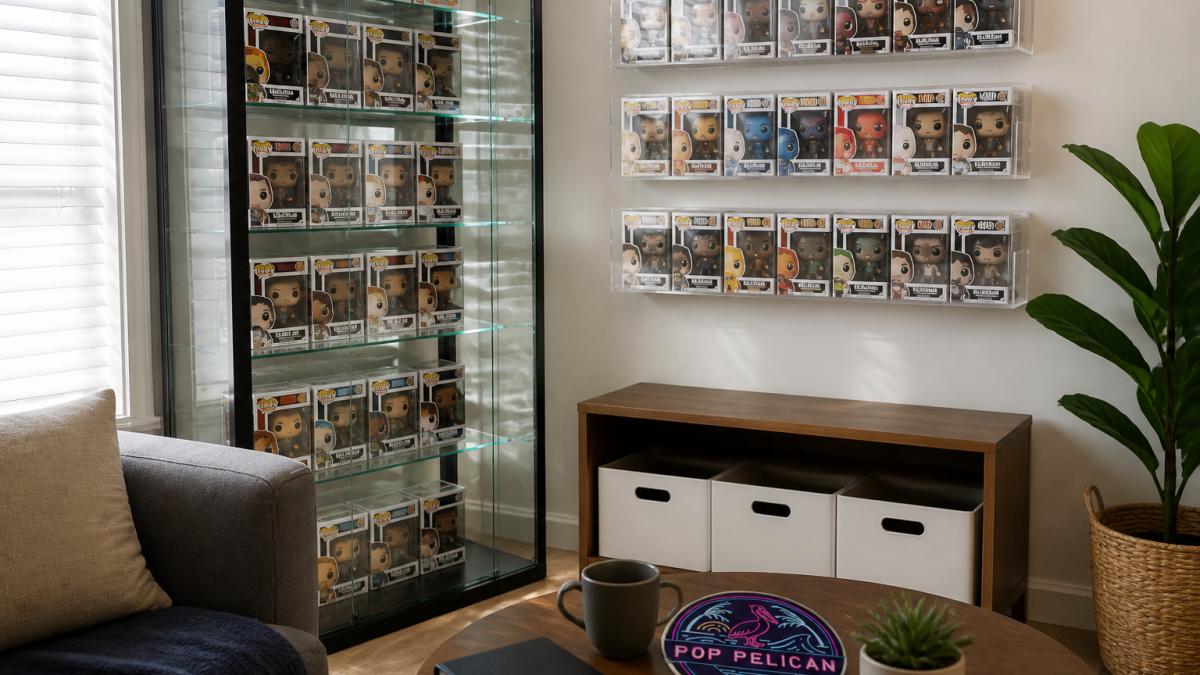
Glass cabinets. The best visibility and the most protection, but also the heaviest. A full-height cabinet with glass doors and adjustable shelves is the classic collector's centrepiece.
Acrylic cases. Lighter, cheaper and easier to move between rooms. For a premium piece that suits shelf or case display, see the Batman The Animated Series Harley Quinn Resin Bust.
Wall-mounted cases. The answer when floor space is gone. Fix them into studs, not plasterboard alone, and check the weight rating before loading a shelf with boxed figures.
Sizing a Case Before You Buy
Work from the figure, not the case. Measure your tallest boxed figure (standard boxes run roughly 16cm tall, but multi-packs and larger moulds run bigger), add a finger's width of clearance, and use that as your minimum shelf gap. Then count how many figures fit across the case's internal width. A case that looks generous in a showroom can hold fewer boxed figures than expected once you allow for the door frame and shelf brackets.
A simple capacity check: internal shelf width divided by box width gives figures per row; rows per shelf multiplied by shelf count gives total capacity. Subtract one figure per shelf for handling clearance. That number, not the marketing photo, is what you're buying.
Dust, UV and Long-Term Preservation
Dust is the slow killer of any display. Glass and acrylic panels keep most of it off, but sealed cases trap moisture too, so add a silica pack and swap it every few months. UV light fades box colours and yellows plastic windows. Keep cases out of direct sun, and if a room gets strong afternoon light, consider UV-filtering film on the glass.
Storing Funko Pops In Box vs Out of Box
Storing Funko Pops in box preserves resale value and protects paint from dust and knocks. Out-of-box display shows the figure properly and saves space, since bare figures take up a fraction of the room.
The trade-off is real. In-box collectors keep value but lose shelf space fast. Out-of-box collectors gain room and visibility but accept that paint can fade and small accessories go missing. A mixed approach works for many: keep rare and limited editions boxed, display common figures loose.
Watch out: storing loose figures in a sealed plastic tub without ventilation traps humidity, and that's what causes sticky residue on older vinyl. Use breathable boxes or add ventilation holes.
How to Organise Funko Pops by Category, Series and Number
Organising by category is the fastest way to make a large collection usable. Group by franchise first, then by series, then by number within the series. That three-tier structure means you can find any figure without pulling out every box.
- By franchise: Star Wars, Marvel, anime, gaming
- By series: Retro Series, Pop Rides, Deluxe, a Star Wars Darth Vader Retro Series Pop Vinyl shows how series-based sorting works in practice
- By number: the moulded number on the box, ascending
Alphabetical order suits collectors who buy across many franchises and want a simple lookup. Numerical order suits completionists chasing a full run. Pick one and stick to it, because switching systems mid-collection is a weekend you won't get back.
Shelving, Cube Storage and Making Vertical Space Work
Shelving is where most collections run out of room. Cube storage is the most forgiving option: modular, stackable and easy to expand one unit at a time. Floating shelves look cleaner but carry less weight. Wire racks are cheap and ventilated but let dust through from above.
Vertical space is the resource most collectors ignore. A wall that holds three shelves at eye level can hold six if you space them to box height rather than guessing. Measure your tallest box, add a finger's width, and use that as your shelf gap. LED strip lighting under each shelf makes boxed figures readable without glare, and it's the single cheapest upgrade to a display.
Matching Storage to Collection Size and Budget
Budget tiers matter more than brand names, but the useful question is cost per figure stored, not the sticker price of the unit. A cheap tote that holds forty figures well is better value than a cabinet that holds twenty and needs a wall bracket.
Entry tier: totes and basic shelving. Divided plastic totes and a simple shelving unit are the lowest-cost way to store boxed figures. To gauge how many you own and how much space you need, browse individual Pops like the My Hero Academia Present Mic Pop Vinyl.
Mid tier: acrylic cases and modular cube storage. Acrylic protectors and cube units cost more per figure but give visibility and easier access. Cube storage is the most forgiving because you can add one unit at a time as the collection grows.
Premium tier: glass cabinets and custom joinery. The highest cost per figure, but the best protection and the cleanest look. Justified when the collection includes rare or high-value pieces, or when the display is part of the room's design.
| Collection size | Best storage approach | Protection level | Space needed |
|---|---|---|---|
| Under 50 figures | Two divided totes or one shelf | Basic | One shelf or cupboard |
| 50-150 figures | Cube storage plus acrylic protectors | Good | One wall unit |
| 150-400 figures | Wall-mounted cases plus labelled totes | High | Dedicated shelving wall |
| 400+ figures | Glass cabinets plus a rotation system | Maximum | Dedicated collector room |
The Capacity Maths That Saves a Second Purchase
A collector with 50 boxed figures needs roughly two 30-litre totes with dividers. At 200 figures, you're looking at six to eight totes or a dedicated shelving unit instead. Measure your largest box first, then multiply by how many you own, and add 20% for future growth. That buffer is the difference between buying once and buying twice.
For shelving, the same logic applies vertically. Measure your tallest box, add a finger's width, and divide the available wall height by that gap. A wall that holds three shelves at eye level can hold six if you space them to box height rather than guessing. LED strip lighting under each shelf makes boxed figures readable without glare, and it's the single cheapest upgrade to a display.
Building Your Storage Plan Before Your Next Haul
A storage plan is a one-page decision you make before the next release wave lands. Use this checklist:
- Count your current collection by boxed and loose
- Measure your tallest and widest box
- Choose one organisation system: franchise, series or number
- Pick a budget tier and stick to it
- Reserve 20% spare capacity for growth
- Add dust and UV protection to any display
- Label every tote on the short end
Frequently Asked Questions
What is the best way to store Pop Vinyl figures?
The best method depends on whether you keep figures boxed. For boxed collections, use rigid storage totes with dividers so boxes do not crush, and keep them out of direct sunlight. For unboxed figures, a dust-proof display case or glass cabinet protects paint and vinyl from dust and UV. Whichever route you take, plan capacity before you buy: measure your shelf depth and height, group figures by series, and leave room for growth so you are not repacking every few months.
Are Pop Vinyl figures better stored in or out of the box?
Boxed storage protects resale value and keeps the window box intact, which matters for rare or limited editions. Out-of-box display lets you see the figure properly and saves space, but exposes paint to dust and sunlight. Many collectors compromise: keep rare and grail pieces boxed in storage totes, and display everyday favourites out of box in a case with clear panels. Whichever you choose, keep both boxed and unboxed figures away from direct sun, because UV fades vinyl and printed boxes over time.
How do you protect Pop Vinyl boxes from dust and damage?
Use storage boxes with lids rather than open crates, and add dividers or acid-free tissue so boxes do not rub against each other. Stack totes no more than two or three high and keep heavier items at the bottom. For displayed boxes, a cabinet with glass or acrylic doors keeps dust off the window panels. Avoid storing boxes in garages or sheds where humidity and heat swings warp cardboard, and keep everything off concrete floors that can draw moisture.
Can sunlight damage Pop Vinyl figures?
Yes. UV light fades vinyl paint and yellows clear plastic window boxes, and the damage is permanent. Keep shelving away from windows and skylights, or fit UV-filtering film to glass. LED shelves and display cases with solid backs reduce exposure while still lighting the figures. If a room gets strong afternoon sun, rotate displays or use curtains during peak hours. Environmental protection is one of the most overlooked parts of pop vinyl storage, and it costs far less than replacing a faded grail.
The hardest part of pop vinyl storage isn't buying the right box. It's buying it before you need it, so your collection never spends a season stacked in a wardrobe. At Pop Pelican, we stock officially licensed figures and protectors with same-day shipping on most orders and live courier tracking, so your next haul arrives ready for the shelf you've already planned. Get started with Pop Pelican and build a collection that stays protected, visible and easy to manage.


