

Last Updated: November 3, 2026
Quick Summary
To display vinyl figures safely, keep them in a sealed acrylic or tempered glass case, out of direct sunlight and away from heaters, in a dry room with steady humidity. Dust them gently with a soft brush and a dry microfibre cloth, and avoid harsh cleaners.
- Choose a clear acrylic or tempered glass case with a closing door or lid.
- Keep figures out of direct sun, since UV fades paint and yellows clear plastic.
- Use LED lighting, because halogen and incandescent spotlights run hot.
- Dust every few weeks and wipe lightly with a damp microfibre cloth every few months.
- Photograph each figure and record its edition number and purchase details.
Table of Contents
- What You Need Before You Start Displaying Your Figures
- Step 1: Choose the Best Display Cases for Vinyl Figures
- Step 2: Decide Whether to Display Figures in or Out of the Box
- Step 3: Install Shelves and Secure Each Figure
- Step 4: Protect Your Figures From Sunlight, Heat and Dust
- Step 5: Clean Vinyl Figures Safely Without Damaging Them
- Keeping Your Limited Edition Collection Safe Long Term
- Frequently Asked Questions
What You Need Before You Start Displaying Your Figures
Displaying a limited edition vinyl figure is simple, but a few preparations make the difference between a shelf that looks great for decades and one that causes damage, so plan ahead before you begin to display vinyl figures. Before you buy anything, gather the basics: a clean, dry surface, a soft microfibre cloth, cotton gloves for handling, and a clear idea of how many figures you plan to show.
Pop Pelican carries a range of limited editions, including the Transformers Optimus Prime Gold Limited Edition Pop! Vinyl at $39.95 AUD, the Transformers Megatron Limited Edition at $89.95 AUD, and the Stranger Things Eddie Munson Mini Epics figure at $42.95 AUD. Knowing the size and value of what you own helps you choose the right protection.
Work out where the display will go before you buy hardware. Think about:
- Sunlight: Avoid windows that get direct afternoon sun.
- Heat sources: Keep figures away from heaters and electronics.
- Foot traffic: Choose a spot that is not bumped every day.
- Wall strength: Check what your walls can hold before mounting shelves.
Watch out: Do not handle a figure with bare hands for long. Skin oils can leave marks on the paint and the vinyl over time.
Step 1: Choose the Best Display Cases for Vinyl Figures
A good display case is the main line of defence against dust, knocks and curious pets, and it is the first thing to choose when you display vinyl figures at home. Look for a case made of clear acrylic or tempered glass with a closing door or lid. Acrylic is lighter and less likely to break, while glass scratches less easily. Both work well if the case seals properly.
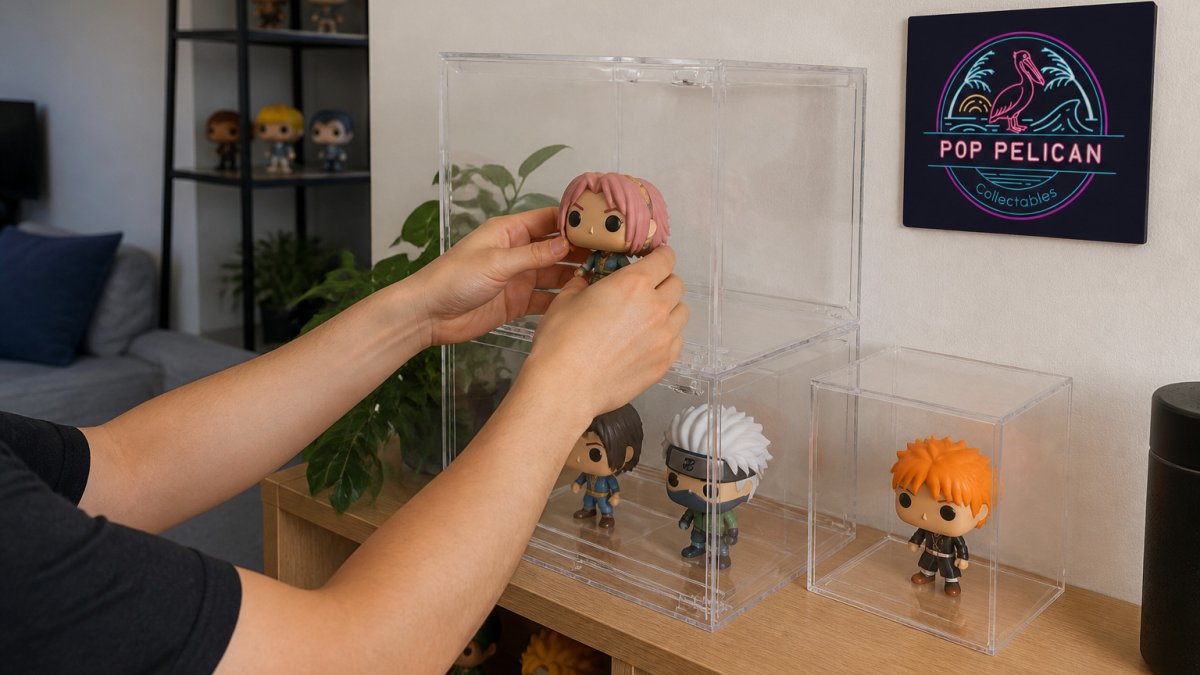
Size matters too. Measure the tallest figure in your collection, then leave a few centimetres of clearance above it. Many boxed figures take up more room than the figure alone, so measure the box before you buy.
For a collection of several figures, a shelf case with a front panel works well. For one or two rare pieces, a small individual cube case gives extra protection.
Plain-language guide to choosing:
- One or two special figures: a single acrylic cube case
- A growing collection: a shelf unit with glass or acrylic doors
- Frequent display changes: an open shelf with a removable dust cover
Step 2: Decide Whether to Display Figures in or Out of the Box
This choice affects both looks and value. A figure kept in its box keeps its packaging, which many collectors want for resale. The box also blocks dust and light. A figure displayed out of the box shows its full paint detail and looks better on a shelf.
Many collectors choose a mix. They keep the rarest, most valuable figures boxed and display their favourites loose. If you display a figure outside its box, keep the box in a dry, dark place. Store it flat and upright so the cardboard does not warp.
The Star Wars: Clone Wars Rex Limited Edition at $199.95 AUD comes packed in a pre-packaged UV premium plastic protector. Keep that protector on for as long as you can, even when the figure is on display.
- Keep boxed figures for resale value
- Display loose figures for the best look
- Store empty boxes flat, in a dry, dark spot
Step 3: Install Shelves and Secure Each Figure
If you mount shelves on a wall, check the load rating printed on the shelf bracket. Fix brackets into wall studs wherever possible. If a stud is not in the right spot, use rated wall anchors suited to the wall material.
Add a front rail or lip to each shelf. This stops figures sliding off when a door is opened or a shelf is bumped. A small piece of museum putty or adhesive pad under the base can also keep a figure steady.
Place heavier figures on lower shelves and lighter ones higher up. Leave a little space between figures so you can lift each one out without knocking its neighbours.
Test the setup before loading it fully. Add one figure, check that the shelf holds firm, then add the rest.
Step 4: Protect Your Figures From Sunlight, Heat and Dust
Most guides stop at "keep it out of the sun". Limited editions need tighter limits, because a faded paint job or yellowed window cannot be replaced. The practical approach is to set target conditions, then monitor them rather than guess.
Light. Ultraviolet radiation is what fades paint and turns clear plastic yellow. Ordinary window glass blocks some UVB but lets most UVA through, so a figure near a window still fades over months. Aim to keep figures out of any line of direct sun, and where that is not possible, fit UV-filtering film to the glass or choose a case with UV-resistant acrylic.
Heat. Vinyl softens and can slump or warp at sustained high temperatures, and cardboard boxes cockle and lose shape. Keep the display away from heaters, radiators, ovens, and the tops of electronics that vent warm air. A steady room temperature is better than a spot that swings hot and cold, because repeated expansion and contraction stresses paint and joints.
Humidity and moisture. Damp is the quiet killer of packaging. Cardboard absorbs moisture, softens, and can grow mould, and metal parts inside a figure can corrode. Aim for a dry room with steady humidity rather than a bathroom, laundry, or unventilated garage. A simple hygrometer is inexpensive and takes the guesswork out of it; most collectors find that keeping the room in a comfortable, stable band and away from damp walls is enough. Never store boxes against an external wall that draws condensation.
Transformers - Optimus Prime Gold Limited Edition (Pop! Vinyl) →
Dust. Dust is abrasive and works into crevices, and on an open shelf it settles on paint and into box seams. A sealed case is the best defence. Where the display is open, dust every few weeks with a soft brush or dry microfibre cloth rather than letting it build up.
Watch out: A sealed case traps moisture as well as keeping dust out. If a case fogs or smells musty, ventilate it and dry the room before resealing, or you will trade a dust problem for a mould problem.
A simple monitoring routine:
- Monthly: check for dust, condensation, and any sign of fading or yellowing
- Seasonally: recheck humidity and temperature as the weather changes
- After any move or reorganisation: confirm the display is still out of direct sun and away from heat sources
The article's key protection limits are summarised below so you can check your display setup at a glance.
| Risk | Main damage | Practical fix |
|---|---|---|
| Sunlight | Fades paint, yellows clear plastic | Keep out of direct sun; use UV-filtering film |
| Heat | Softens vinyl, warps cardboard | Keep away from heaters and electronics |
| Humidity | Softens boxes, mould, corrodes metal | Keep in a dry room with steady humidity |
| Dust | Abrasive, settles in seams | Seal in a case or dust every few weeks |
Step 5: Clean Vinyl Figures Safely Without Damaging Them
Cleaning should be gentle and infrequent. Start with a dry, soft brush to lift loose dust. For light marks, dampen a microfibre cloth with a small amount of water, wipe lightly, then dry straight away with a second cloth.
Avoid harsh cleaners, alcohol, solvents and abrasive sponges. These can strip paint, cloud acrylic or soften vinyl. Never soak a figure in water.
Handle figures by the base or the body, not by delicate parts like weapons, antennae or hair. Put the figure on a soft towel while you clean it, and keep your cotton gloves on if you prefer.
A simple routine:
- Every few weeks: dust with a soft brush
- Every few months: wipe lightly with a damp microfibre cloth
- Once a year: check cases, seals and shelf brackets
Keeping Your Limited Edition Collection Safe Long Term
Limited editions gain value precisely because they are scarce, and scarcity makes them hard to replace. If you want to arrange a themed set that stays protected over time, see how to curate a movie scene display with figures.
Build a condition record. For each figure, photograph it from several angles, front, back, base, and any box or protector, in good light, with a scale or coin for size reference. Note the edition or serial number, the purchase date, where you bought it, and the price paid.
Keep the paperwork. Original receipts, edition certificates, and any authenticity cards are part of the item's provenance and support both insurance claims and any future sale. Before investing in protective gear, you can check whether vaulted figures from private sellers are safe to buy. Keep them flat and dry with your records, not loose in the display.
Insure deliberately. Home contents policies vary in how they treat collections, and many have limits on single items or on collections as a category. Check with your insurer whether your figures are covered as general contents or need to be listed separately, and whether they want valuations or receipts. Documenting condition and value before a loss is far easier than reconstructing it afterwards.
Run a maintenance check. Every few months, look for loose brackets, cracked acrylic, yellowing packaging, condensation inside cases, and any sign of damp or pests. Fix small problems early, a loose bracket caught now is a fallen figure prevented later. Recheck shelf load ratings if the collection has grown since installation.
Store the off-display items properly. Spare boxes, protectors, and figures not currently shown should go flat and upright in a dry, dark cupboard, away from damp external walls and heat sources. Keep original receipts and certificates with your records rather than in the storage box, so a single damp event cannot destroy both the item and its paperwork.
Watch out: Photographs taken only at purchase will not prove condition years later. If you cannot show the figure's current state, an insurer or buyer has no way to distinguish normal ageing from damage.
If you are buying limited editions for the first time, you can contact the Pop Pelican team for help with your collection.
Frequently Asked Questions
How do you display vinyl figures without damaging them?
Keep figures on a stable, level shelf and use a clear case or a rated wall mount with a front rail so they cannot slide or tip. Avoid tight packing against other items, which can scuff paint and bend stands. Handle figures by the base rather than the head or arms, and keep them out of direct sunlight and away from heaters. Check the shelf load limit before adding weight, and recheck displays after moving or bumping the furniture.
Should limited edition vinyl figures be displayed in or out of the box?
Keeping a figure in its original packaging preserves the box condition, which often matters to collectors and buyers. Figures displayed out of the box are easier to see and show off, but they are more exposed to dust, handling and fading. A common approach is to keep the most valuable figures boxed, inside a UV-resistant protector, and display out-of-box figures you handle often. Whichever you choose, record the condition with photos.
How do you protect vinyl figures from sunlight?
Position displays away from windows, or use UV-resistant glass or acrylic cases. Direct sunlight over time can fade paint and discolour both the figure and its box. Rotate the position of any figure near a window and consider blinds or curtains during the brightest part of the day. Keep displays away from heaters and heat vents, since heat can warp plastic and soften stands.
How often should you clean displayed vinyl figures?
A light dusting every few weeks is usually enough for figures in a sealed case. Figures on open shelves may need dusting more often. Use a soft, dry brush or microfibre cloth, and only use a barely damp cloth for stubborn marks. Test any cleaner on a hidden spot first, and never soak a figure or its packaging.


